I know in that real life, Aang wouldn't have heard Katara. The wind would be way too noisy. Aang could have heard Katara through their spiritual connection. As the Avatar, Aang has a deep connection to the world around him, and this includes the ability to communicate with others on a spiritual level. This connection would have been even stronger in this situation, as Aang was in a very heightened state of emotion. It is also possible that Katara's voice was able to penetrate through the storm that Aang had created. The storm was a manifestation of Aang's anger and grief, and it is possible that Katara's calm and reassuring voice was able to break through this barrier and reach Aang's consciousness.
In the Avatar universe, not every Fire Nation soldier is necessarily a firebender. Firebending is a specific form of elemental manipulation tied to the Fire Nation, allowing individuals to generate and control fire. However, not all citizens or soldiers in the Fire Nation possess bending abilities. Many soldiers in the Fire Nation army are non-benders who rely on conventional combat skills, weaponry, and military tactics rather than bending abilities. Firebenders, however, often hold prominent positions within the military due to their powerful abilities.
An Agni Kai is a traditional firebending duel in the Fire Nation, often used to settle disputes between firebenders. It is considered a sacred and honorable tradition, symbolizing the resolution of conflict through firebending mastery and personal honor. The term "Agni Kai" is derived from the Sanskrit words "agni" meaning "fire" and "kai" meaning "sea," representing the intensity and fluidity of the duel.Agni Kai duels are governed by strict rules and etiquette, emphasizing respect, formality, and fairness. The combatants face each other on a designated dueling platform, surrounded by spectators who maintain silence and solemnity during the duel. The duel begins with the ceremonial lighting of a small fire, and the combatants bow to each other in acknowledgment.
The duel itself is a fierce and intense display of firebending prowess. The combatants utilize their firebending skills to attack, defend, and outmaneuver each other. The goal of the duel is to subdue the opponent without causing fatal injury. However, in some cases, Agni Kais can result in serious injury or even death.
The outcome of an Agni Kai has significant consequences for the participants, determining their status and honor within the Fire Nation. The victor gains respect and admiration, while the loser may face disgrace, exile, or even execution. Additionally, Agni Kais often carry political implications, as they can be used to settle disputes between powerful individuals or factions within the Fire Nation government.
Agni Kai duels played a prominent role in the narrative of Avatar: The Last Airbender, particularly in the character arcs of Zuko and Azula. Zuko participated in several Agni Kais, including a pivotal duel against his father, Fire Lord Ozai, to determine the fate of the Fire Nation. These duels served as catalysts for Zuko's personal growth and transformation, as he grappled with the complexities of honor, loyalty, and redemption.
Agni Kai duels represent a unique and fascinating aspect of Fire Nation culture in Avatar: The Last Airbender. They embody the Fire Nation's emphasis on power, honor, and tradition, while also highlighting the potential consequences of unchecked ambition and the pursuit of personal glory at the expense of others.
Zuko had previously lost an Agni Kai to his father, Fire Lord Ozai, and the experience had left him deeply scarred both physically and emotionally. Iroh was concerned that Zuko was on the verge of making the same mistake again by challenging Zhao, an experienced and powerful firebender.
Iroh's warning was intended to help Zuko avoid another humiliating defeat and to prevent him from further damaging his already fragile self-esteem. He wanted Zuko to remember that he was not invincible and that he needed to approach the upcoming Agni Kai with respect and caution.
Uncle Iroh's question aims to caution Zuko against rushing into another duel, reminding him of the grave repercussions and the emotional toll such actions can have. It's a subtle way of urging Zuko to reflect on his past decisions and their consequences before engaging in another intense battle.
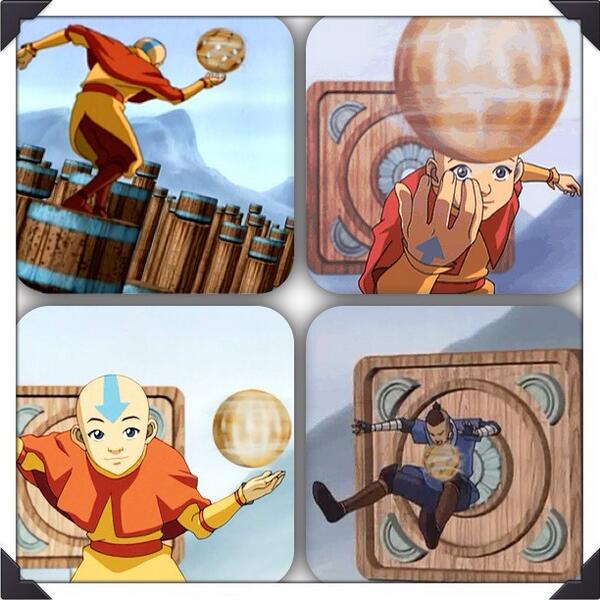
While bending abilities provide a plausible explanation for the superhuman feats we witness in Avatar: The Last Airbender, it's hard to fathom how Sokka could have survived that airball game. His fall from the top of the air temple was quite a distance, and his impact with the stone disk was no less jarring. This pattern of seemingly impossible survival extends throughout the series, often defying conventional physics even for non-benders like Sokka.
It's certainly possible that Aang subconsciously used his airbending abilities to protect Sokka from the fall. Aang's control over airbending is incredibly precise, and he has demonstrated the ability to manipulate air currents with great finesse. It's plausible that without even realizing it, Aang instinctively used his airbending to cushion Sokka's fall and prevent him from suffering serious injury.
This interpretation aligns with Aang's compassionate and protective nature. He deeply cares for his friends, and it's not surprising that he would subconsciously use his abilities to safeguard them from harm. Aang's instinctive use of airbending in this instance highlights the depth of his connection with his friends and his innate desire to protect those he cares about.


No comments:
Post a Comment